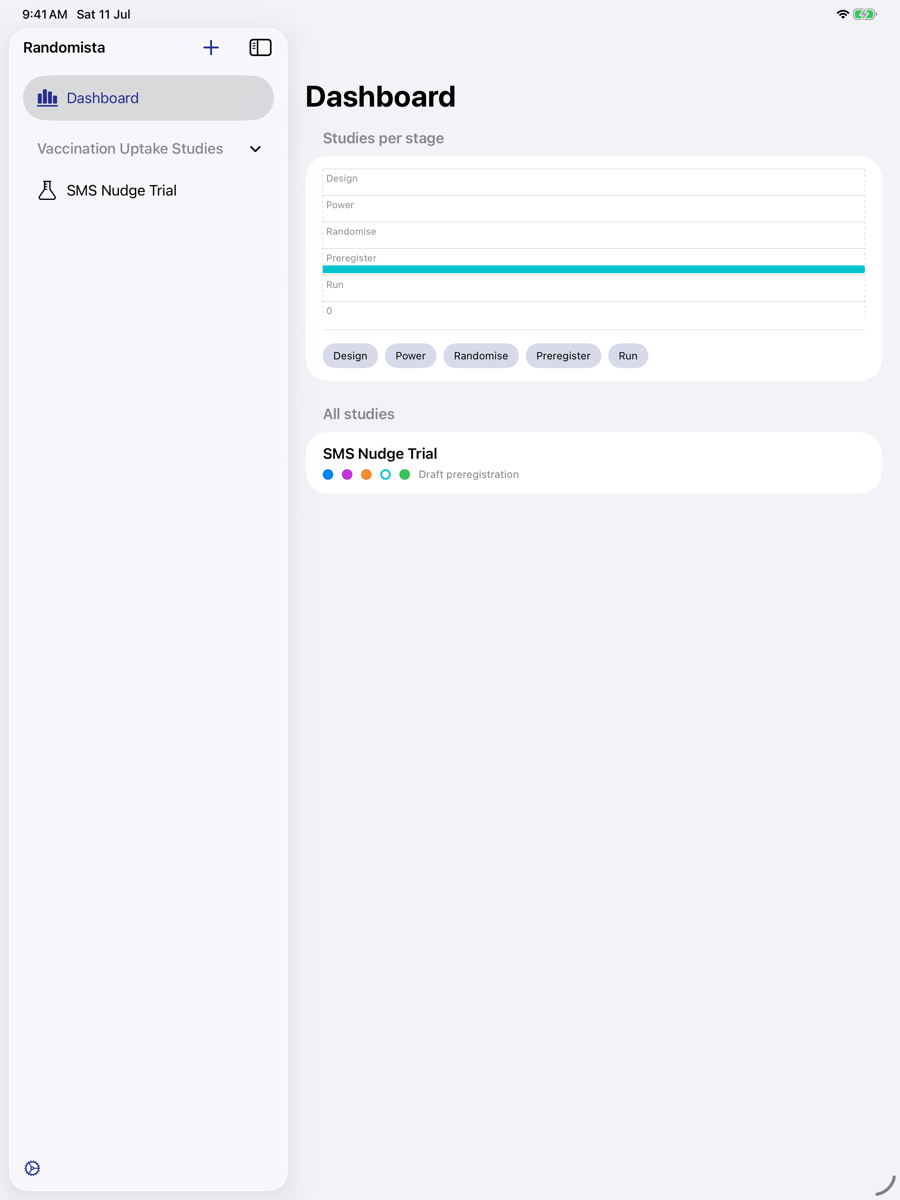
One study, five stages
Every screen exists to make your trial defensible.
Each stage produces an artifact — an adopted power analysis, a sealed sequence, a registered preregistration — and once an artifact exists, the design it depends on locks automatically. No accidental edits to a live trial. Ever.
Your trial's anatomy, made explicit.
Your groups — the "arms" — with the ratio between them and a single control; stratification factors that keep subgroups balanced (with a live count of how many strata you've made); and your primary and secondary outcomes, each with its measure, timepoint, and expected direction. Set it once, and the randomiser and the preregistration both read from it.
The design is the contract. The moment a sealed sequence exists, arms and factors turn read-only; the moment you register, outcomes freeze too. Locks are derived from facts, so they can never drift — and never be forgotten.
Control:Treatment = 1:2, Site × Gender = 4 strata — the ratio footer and strata count update as you type.
Sample sizes you can cite.
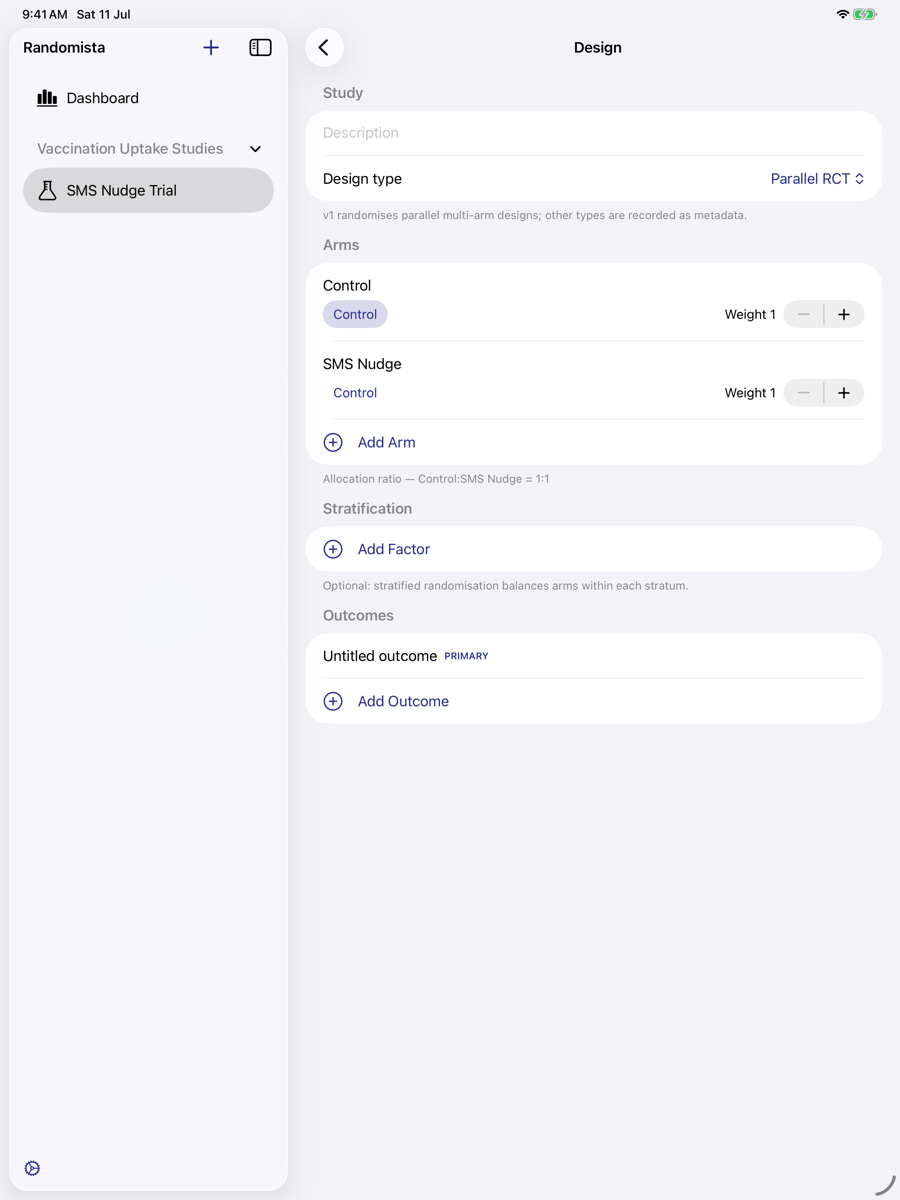
How many participants do you need? Compare two averages (a t-test), two percentages, or several groups at once (ANOVA) — each result checked against R's pwr package. Tap a small, medium, or large effect to begin, allow for dropout, and watch the required sample grow as you ask for more certainty.
One tap adopts the result as your recruitment target, and it flows into the randomiser and the preregistration automatically.
d = 0.5, α = .05, power .80 → 64 per arm. The same numbers R gives you.
Sealed the moment it exists.
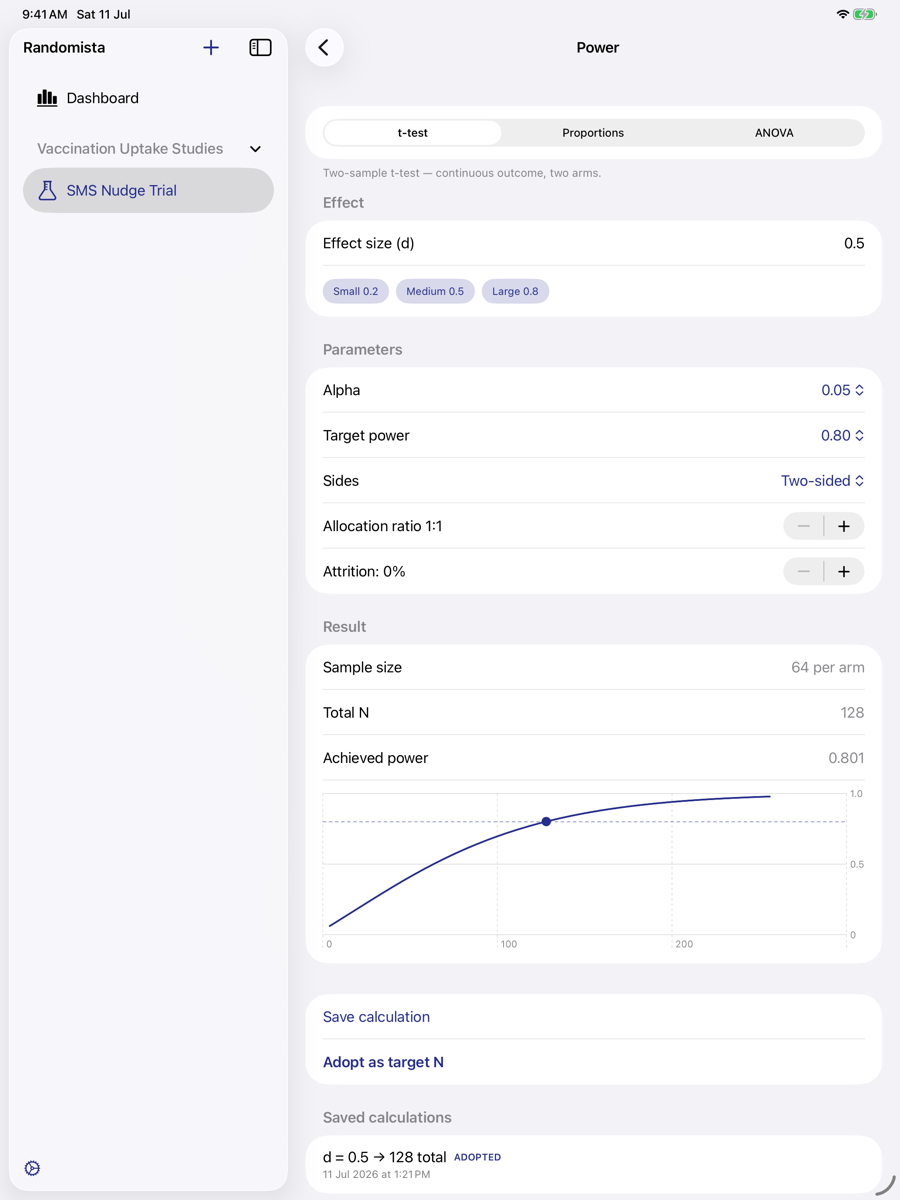
Simple, balanced-block, or stratified sequences, all built from a single starting number (a "seed"). Creating a sequence seals it in one step: its settings are frozen and protected by a digital fingerprint (a SHA-256 hash) that is re-checked every time you open it.
The audit card — seed, PRNG, engine version, hash — is designed to be screenshotted straight into your appendix. Anyone with your seed and settings can reproduce the exact sequence.
No edit button exists. Amendments happen the honest way: a new sealed sequence, or a new study version.
Concealment, by default.
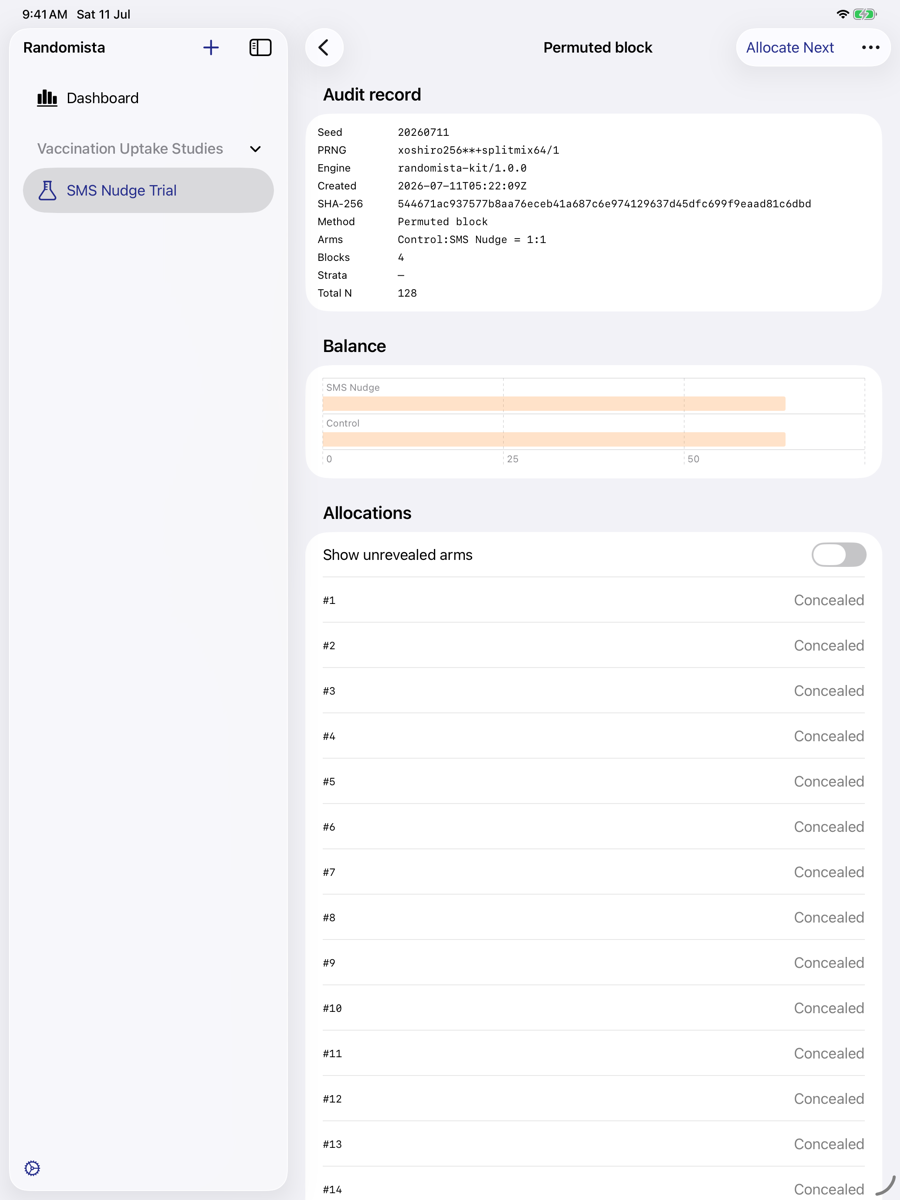
The allocation table hides unrevealed assignments to protect against selection bias. In the field — on the iPhone in your pocket, one-handed at the clinic door — one large button reveals the next allocation: stamped once, with an optional participant label, never editable afterwards.
Export full or concealed CSVs at any moment. If a stored sequence ever stops matching its sealed hash, Randomista tells you loudly — and preserves the evidence.
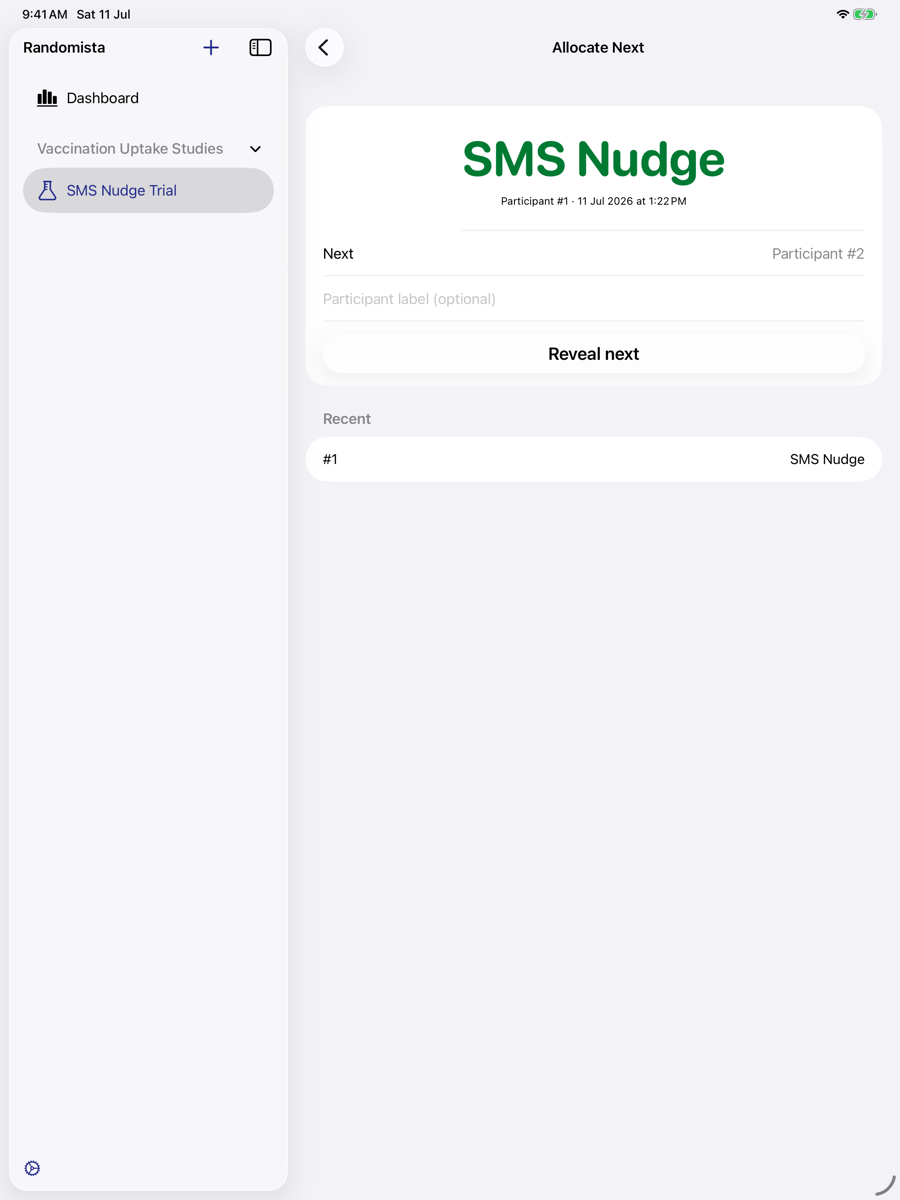
The form fills itself from your design.
Preregistration means committing to your plan publicly before you collect data — increasingly expected by journals and funders. Randomista drafts the standard nine-question AsPredicted form for you: your outcomes, conditions, sample-size reasoning, and randomisation details, all proposed from what you already built. You edit; it never overwrites silently.
Export a Markdown file or a print-styled PDF, ready for the Open Science Framework (OSF). Marking the study as registered freezes the answers and outcomes permanently.
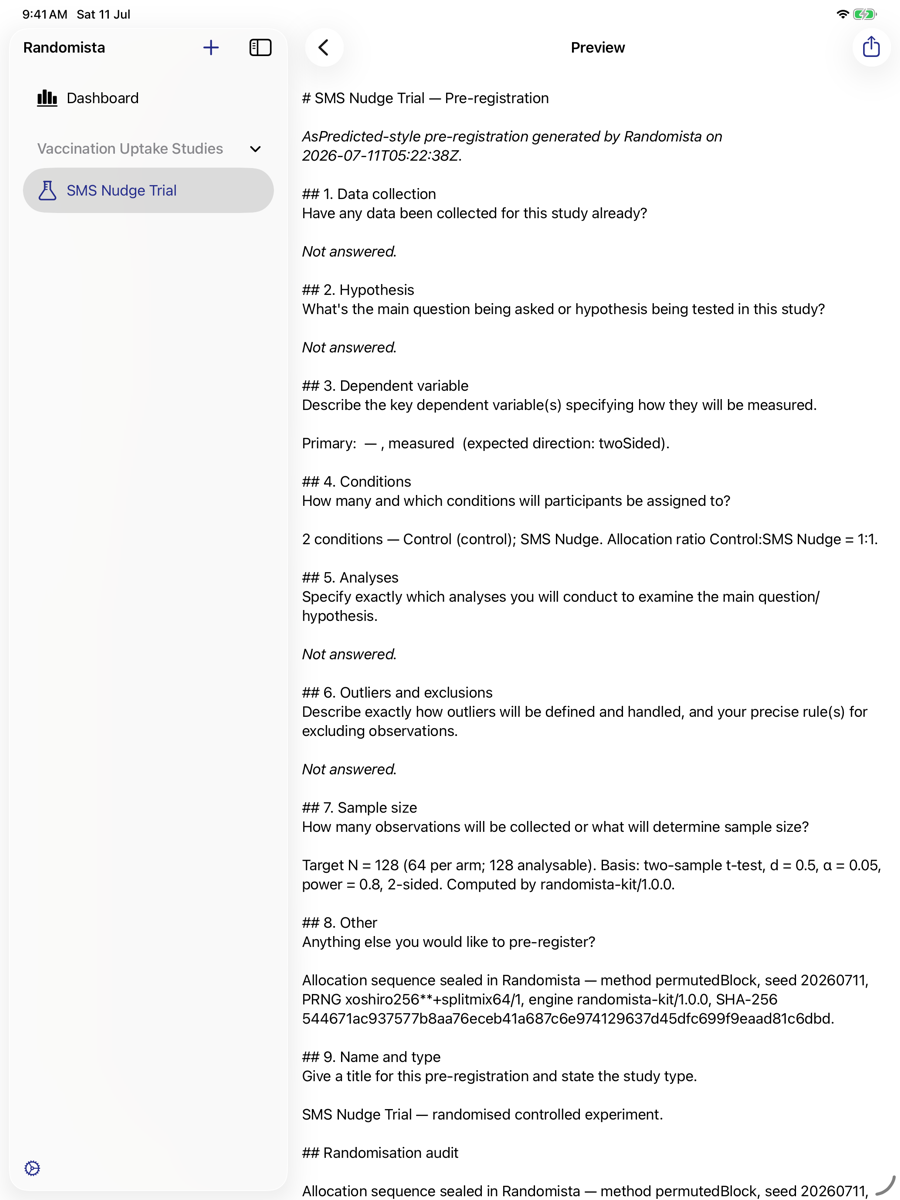
Every study, at a glance.
A cross-project dashboard shows each active study's stage and its next action, plus everything due in the coming week. Per-study checklists come with an RCT starter template — ethics, pilot, prereg freeze, launch, attrition check — and reminders that fire when you told them to.